

Jean-Baptiste-Camille Corot. (French 1796-1875).
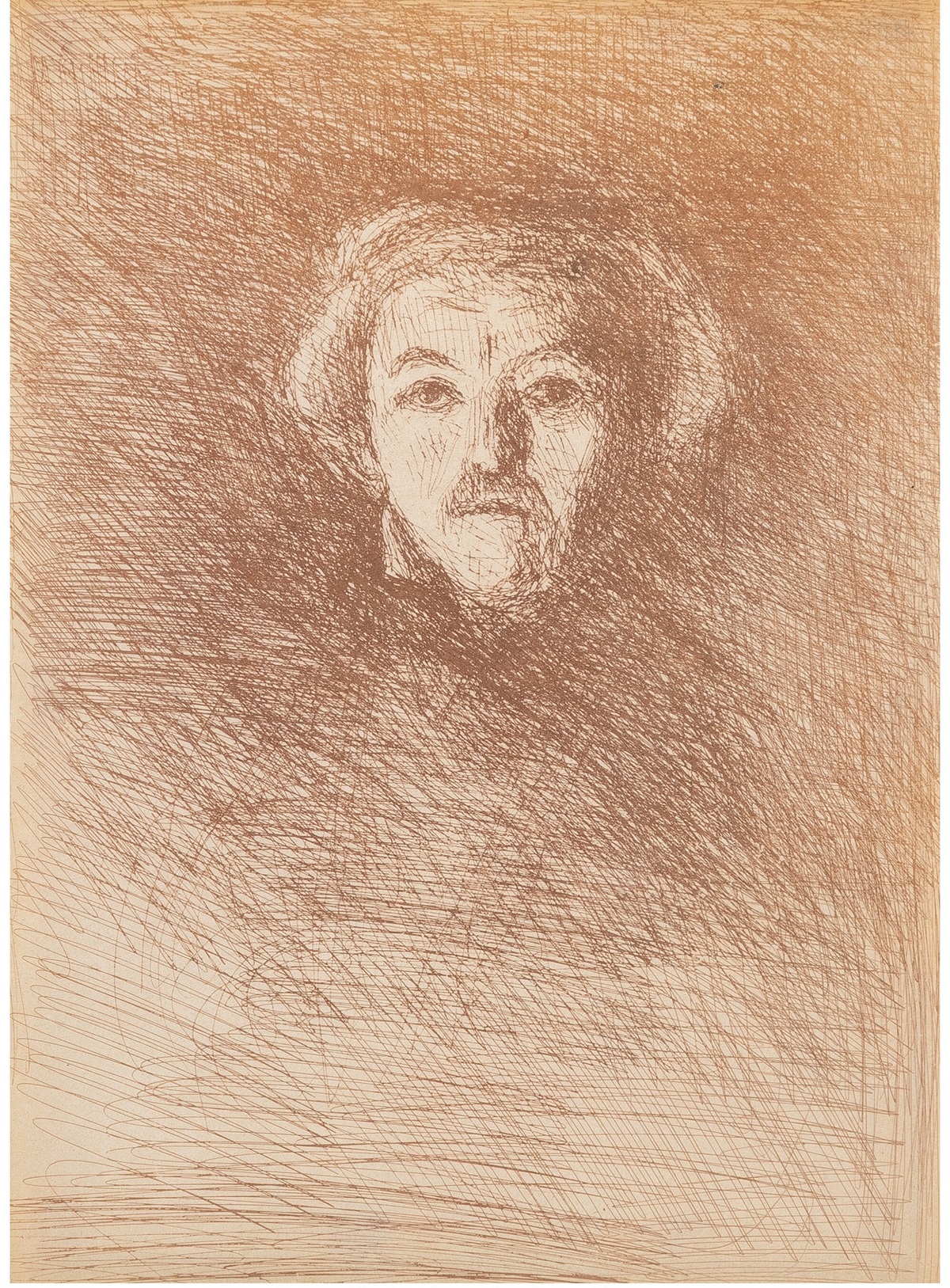
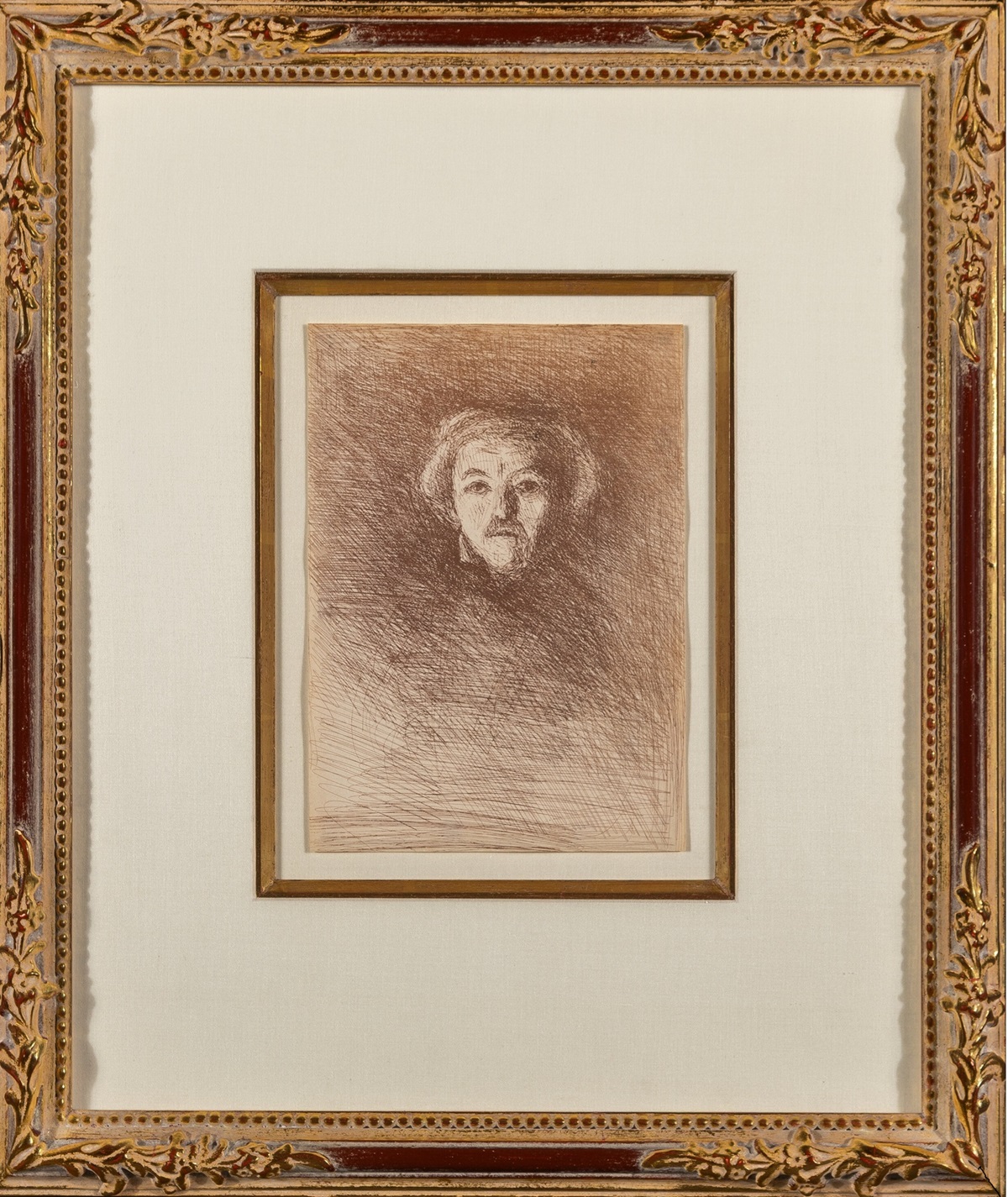
Corot par lui-mê-même(Self-portrait). 1858. Cliché-verre. Delteil 69. 8-1/2 x 6-1/8 inches (21.6 x 15.6 cm) (sheet). Very minor toning, particularly along edges. Negligible undulations in sheet. Hinged and framed under glass. Provenance: Galerie Michael, Beverly Hills;- to a Dallas collection sold by Heritage Auctions, June 5, 2026. Price upon application.
This impression exhibits the hallmark characteristics of a lifetime print, featuring the warm ink tones and delicate, thin wove paper typical of the photographic contact printings produced under Corot’s direct supervision in the 1850s to 1870s.
Housed in a 19 x 16 1/2-inch classic, ornate decorative molding featuring warm, reddish-brown tones paired with distressed gilt/gold highlights and delicate beaded detailing along the inner edge.
Mat: A clean, neutral off-white or cream mat board that provides a classic museum-style border around the print.
Inner Accent: A narrow, warm wood-toned inner fillet (or liner) that sits directly next to the print, framing the artwork and complementing the reddish-brown ink tones of the cliché-verre.
Jean-Baptiste-Camille Corot's cliché-verre prints, represent a fascinating intersection of 19th-century printmaking, early photography, and artistic experimentation. Corot was a most prolific and enthusiastic master, producing dozens of these works.
Cliché-verre (literally "glass plate") is a rare 19th-century technique that bridges drawing, printmaking, and photography without ever using a camera.
Corot typically used a subtractive method:
A glass plate was coated with an opaque substance (like dark collodion or printer's ink).
The artist used a stylus, needle, or etching tool to scratch lines directly through the dark coating, exposing the clear glass.
The plate was then placed over light-sensitive photographic paper and exposed to sunlight (acting just like a photographic negative).
Unlike rigid technical photographs, Corot’s clichéverres look remarkably like his intimate pencil or charcoal sketches. They capture the soft, atmospheric, and luminous qualities of his famous Barbizon school landscapes. Because he was drawing "negative" lines that would print dark against light, Corot had to mentally invert tones. He achieved incredible atmospheric depth, shimmering foliage, and misty light effects through delicate cross-hatching and scratching.
The Birthplace: In May 1853, while visiting his friend and fellow painter Constant Dutilleux in the northern French town of Arras, Corot created his first cliché-verre (often cited as The Woodcutter of Rembrandt).
Although they were created in a studio setting using glass and chemicals, Corot's cliché-verres maintain the spontaneous, direct feel of plein-air nature studies.
Because the glass plates were fragile and could break easily, lifetime print runs were often quite small. Many were later printed in posthumous portfolios (such as the famous 1921 Quarante ClichéGlace portfolio), cementing their status as rare and prized collector's items today. Unlike traditional etchings printed in large commercial editions, Corot's cliché-verres were pulled in very small numbers. Early lifetime or 19th-century printings by associates like Adalbert Cuvelier or Charles Desavary typically yielded only a handful of impressions (often estimated at just 6 to 15 copies per plate).
While Corot created roughly 66 cliché-verres, mostly focusing on his signature poetic landscapes, portraits and specifically self-portraits are uniquely scarce within his small graphic oeuvre.
To order or to be placed on the email list, please contact Jane Allinson. (jane@allinsongallery.com) or call +1 860 429 2322.